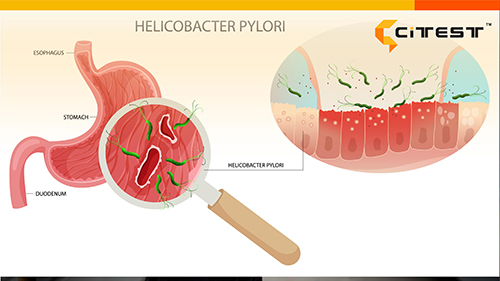
A woman in her thirties goes for a routine check-up. No stomach pain, no bloating, no reason to suspect anything is wrong. Her breath test comes back positive for Helicobacter pylori. She is surprised—she feels fine. But that is exactly the point: roughly 70% of people infected with H. pylori have no symptoms at all. The bacteria can quietly colonize the stomach for years, causing chronic inflammation that eventually leads to ulcers, and in a small percentage of cases, stomach cancer.
This is not a rare scenario. In China, infection rates with H. pylori hover around 40% to 50%—nearly one in two adults. Globally, it is one of the most common bacterial infections. The danger lies in its silence. Without testing, an infected person has no way of knowing they are carrying a pathogen classified as a definite carcinogen. By the time symptoms appear—persistent stomach pain, unexplained weight loss, black stools—the damage may already be significant.
The good news is that detection is remarkably simple. A urea breath test takes about thirty minutes: swallow a capsule, breathe into a bag, and the result tells you whether the bacteria are active in your stomach. Stool antigen tests offer similar accuracy without the need for fasting or special equipment, making them suitable for children and people who cannot easily get to a clinic. These are not sophisticated hospital procedures; they are quick, non-invasive, and widely available.
What should you do? First, if you have never been tested and you live in a region with high infection rates, consider asking your doctor about a breath test during your next check-up. Second, if you test positive, complete the full course of treatment—usually a 14-day quadruple therapy—and get retested afterward to confirm the bacteria are gone. Third, protect those around you: use serving chopsticks, avoid sharing utensils and toothbrushes, and do not feed young children with pre-chewed food, as H. pylori spreads primarily through saliva and contaminated food or water.
In summary, H. pylori is a silent tenant that half of us may be hosting without knowing. It costs little to find out, and the answer can prevent decades of quiet damage. A simple test is the first step toward protecting your stomach—and your future.